
develop skills.
build confidence.
find community.
No experience needed. All are welcome.
5.0
Google Rating
1,000+
Lifetime Students
4 & up
Classes for multiple age ranges30+
Years MartialArts Experience
Life is a Battle. Become Battle Ready.
On the mat, developing your A-Game means mastering four performance pillars:
Foundation: Unshakeable fundamentals.
Systems: Setups and sequences.
Execution: Skills tested under real resistance.
Diagnostics: Adapting in real-time and improving.
Off the mat, it's the same. Show up. Build the base. Practice under pressure. Adapt. That's developing your A-Game.
Trusted By Our Members
Frequently Asked Questions
Check out the most frequently asked questions.
Still haven't found the answer?
Contact UsI've never trained before. Will I be lost?
1. I've never trained before. Will I be lost?
For Adults
No. The first 30 days are Foundation—position recognition, survival vocabulary, and controlled movement. Everyone starts here, regardless of background. You don't need to know anything except how to show up. Your coach will place you with partners at your level, explain one thing at a time, and never overload you with information. By day 30 you'll have enough framework to know what you're doing. By day 90 you'll have a game. The system assumes you're starting from zero. That's the point.
Start date: Any Monday. Bring a gi if you have one. We have loaner gis.
For Teens (13+)
You're learning in a room full of people at every level—white belts, blues, purples, and black belts. Your first class is an intro session where the coach explains what Jiujitsu actually is and walks you through the fundamentals. You'll drill moves with a partner who's done this before. They're there to support you and help you understand the movements. Within a week you'll understand the position system (standing, guard, pins). Within four weeks you'll stop panicking. Within 90 days you'll have a real game. No prior training required.
Next steps: Sign up for an intro class. Wear comfortable clothes. We'll provide the rest.
For Kids & Parents
Your child will start in a class with other kids their age, learning the same positions and survival basics. The coach breaks down every move into one focus point at a time—no information overload. Your child will partner with other beginners. They'll drill, ask questions, and get comfortable. Most kids who were nervous day one are excited by day three. They see other kids doing it and understand that confusion is normal.
Your child progresses through a belt checklist system from Day 1. Gray Belt has three stripes—each stripe has specific techniques and survival skills they need to demonstrate. When they show they've got it, they earn the next stripe. Speed doesn't matter. Competency does. Some kids stripe faster. Some need more reps. Both are correct.
This isn't babysitting. It's a real progression system built for kids who've never done anything like this.
Getting started: Sign your child up for the intro class. Have them wear comfortable clothes (no jewelry). We'll take it from there.
I'm too old/young to start. Isn't this for younger people?
For Adults
We have students aged 22 to 62 currently training. The oldest one earned his blue belt last year. Age is not your limiting factor—consistency is. A 40 year old who trains three times a week for a year will be a better Jiujitsu player than a 22 year old who trains twice a month. Your job isn't to be young. Your job is to show up. The position system works at any age. The leverage over strength principle means you get better at Jiujitsu as you get older because you stop trying to muscle through things.
Jiujitsu is the one martial art where you can be competitive and improving well into your 60s. This isn't theoretical. This is how the sport actually works.
What to expect: Foundation is the same for everyone. The pace is controlled. You'll train with partners matched to your experience level. The room is mixed ages on purpose.
For Teens (13+)
We run classes for 13+ that are separate from kids 7 to 12. You're training with people closer to your age and at your experience level. The progression system doesn't care if you're 13 or 17. Everyone follows the same belt path. If you're 16 and a green belt, you can transition into the adult program. If you're 16 and ready for blue belt, you earn it and progress in the adult program. If you're 13 and keeping pace, same thing applies at your own timeline.
You're not "too young" to start if you're 13. You're not "too old" if you're 18 and have never trained. The system doesn't have an age requirement. It has a consistency requirement.
What to expect: Three times a week, you'll get stronger, smarter, and better at problem solving under pressure. This isn't a phase. It's a skill you'll have forever.
For Kids & Parents
We take kids starting at age 4, but honestly, 7 is where the real progression begins. At 4 to 6 they're doing movement and play. At 7+ they're learning the actual system. Positions, survival, discipline are the focus. Kids progress at their own pace. A 7 year old and a 12 year old in the same age group might not be the same belt level, and that's correct. We don't rush anyone to the next stripe before they're ready.
Your 7 year old won't be training with your 15 year old. We separate by age and level. But within their age group, they'll see kids ahead of them and understand where they're going. That's motivation.
The long view: A child who starts at 7 and trains consistently through age 16 will earn a green belt—the highest kids belt. At 16, they can transition into the adult program as a blue belt and continue the path. That's 9+ years of progressive skill building. This is an investment in a real capability, not a phase they'll outgrow.
Will I get hurt?
For Adults
We do our very best to minimize injury risk by teaching students to break fall, work at your own pace, and tap early and often.
When you tap, everything stops immediately. Your partner releases. The coach watches. That's it. Tapping is respect for your own body and respect for your training partner.
There is no live sparring in Fundamental classes, and all white to blue belt students are required to attend Fundamentals. That's where you learn. In Fundamentals, we use situational drilling with progressive resistance directed by your coach. You control the intensity. Your coach controls the progression.
Your coach watches you. Knows where you are. Adjusts the resistance to match your level. You tap when you need to. Everything stops.
This is why we haven't had a serious injury in over 10 years of operating.
Tapping. Fundamental classes only. Progressive resistance at your pace.
Many of our adult practitioners train twice a week and stay completely injury free. That's the system.
What we do: Warm up, situational drilling with progressive resistance in Fundamentals, then optional sparring for white belts who've earned it. You choose your intensity. You choose your partners. You tap, everything stops.
For Teens (13+)
One rule. Tap early, tap often.
That's how you stay safe. That's how you learn faster. That's why we haven't had a serious injury in nearly 10 years.
You go at your own pace. While you're white to blue belt, you train in Fundamental classes where there is no live sparring. You do situational drilling with progressive resistance that your coach directs. You control how hard you push. Your coach controls the progression.
When you tap, your partner stops. The coach watches. Nothing else matters. You learn. You progress. When you're ready to move beyond Fundamentals, you've already trained hundreds of times under control.
Most injuries happen when people ignore their body's warning signs or skip the foundation. We don't let that happen here.
What to expect: You'll be challenged at your level. You'll face positions you can't escape. That's the point. You'll tap. Everything stops. You'll learn. That's the process.
For Kids & Parents
Kids under 16 generally don't spar live in our system. They train in structured classes. They do situational drilling with controlled pressure, and they learn to tap.
Your child goes at their own pace. No forcing progression. No pressure to "compete" with other kids. The coach directs the resistance. Your child communicates through tapping. That's how they stay safe.
Tapping is how your child learns to listen to their own body. It's how they communicate with their partner. It's how they build confidence instead of fear. Kids who understand tapping early understand respect for their own limits and respect for others.
Our injury prevention record speaks for itself: no serious injuries in nearly 10 years. That's because every single person in the gym, from age 7 to age 60, taps when something isn't right, and every coach respects that tap immediately.
What actually happens: Your child learns positions safely. They do situational drilling. They tap when they need to. Their partners respect the tap immediately. Your coach adjusts the resistance to their level. By age 16, if they've trained consistently, they're not just safer. They're skilled. They understand their body. They know how to communicate.
How much does it cost? What is the value I get?
For Adults
Monthly memberships begin at 9/month. Greater price breaks available with longer commitments of 90 days, 180 days, or annual memberships.
Private 1-on-1 and small group format lessons are also offered to accelerate learning and skills.
Enrollment bundles include the Team Talon Gi, Team Talon rash guard, team uniform bag. Boxing gloves are purchased separately. Greater price breaks apply for longer term commitments.
The real value: We don't just teach the art of Jiujitsu. We teach how to apply the A-Game Framework to your life, your home, and in your community. That's the true value of belonging.
You're getting a progression system built by a black belt. You're getting a coach who knows where you're going and how to get you there. You're getting a community of people at every level solving the same problem you're solving. And you're learning a skill you'll have for life.
For Teens (13+)
Monthly memberships begin at 9/month. Greater price breaks with longer commitments (90 days, 180 days, annual).
Private 1-on-1 and small group format lessons available to accelerate learning and skills.
Enrollment bundles include the Team Talon Gi, Team Talon rash guard, team uniform bag. Boxing gloves purchased separately. Greater price breaks for longer term commitments.
The real value: We don't just teach the art of Jiujitsu. We teach how to apply the A-Game Framework to your life, your home, and in your community. You're getting a progression system, not just a place to work out. You'll have a skill. You'll have community. You'll have a path.
For Kids & Parents
Monthly memberships begin at 9/month. Greater price breaks with longer commitments (90 days, 180 days, annual).
Enrollment bundles include the Team Talon Gi, Team Talon rash guard, team uniform bag. Boxing gloves purchased separately. Greater price breaks for longer term commitments.
The real value: Your child earns a belt system with real milestones. Measurable progress every 90 days. They're learning discipline, respect, and problem solving under pressure. More than that, they're learning to apply the A-Game Framework—Work Hard, Try Your Best, Have Fun, Give Back, Never Give Up—to their school, their home, and their friendships. That's the true value of belonging.
Do I need to be in shape to start?
For Adults
Being out of shape is not a barrier to entry. Being out of breath is temporary. Every person in the room was out of shape at some point. Jiujitsu builds your fitness as you train. You don't need to be fit to start. You get fit by training.
We have many success stories, with weight losses of 75+lbs in some cases.
The warm up the first week will wipe you out. Week two you'll recover faster. By week four your aerobic capacity will shift. By 90 days you'll see a real difference in how your body feels and what it can do. Most adults who start training report better sleep, lower resting heart rate, and clarity they didn't have before.
That difference compounds. Members have reported weight loss of over 60 pounds. Not from dieting. From showing up. From three times a week for months. From problem solving under pressure. Your body doesn't know the difference between exercise and survival. It just adapts.
That said, if you have a serious medical condition (heart issue, recent surgery, orthopedic problem), tell your coach before class. We'll modify. We'll adjust. We won't push you into something that will hurt you.
The real requirement: Show up three times a week. That's it. The fitness follows.
For Teens (13+)
You'll be tired after the first class. That's correct. That means your body is adapting. By week four you'll stop being exhausted and start being energized. Your conditioning will improve faster than you expect because Jiujitsu is constant problem solving plus movement. Your brain is working, which means your whole system is working.
You don't need to be an athlete to start. You need to show up.
For Kids & Parents
Kids are naturally more fit than most adults think. If your child can run around and play, they can do Jiujitsu. The class paces itself. It's movement based, not conditioning based. Your child will work hard and have fun—not collapse gasping for air.
Jiujitsu actually improves a child's body awareness, coordination, and cardiovascular fitness over time. Kids who start sedentary and train consistently for a year show noticeable improvement in how they move and what their bodies can do.
No fitness test required. Just show up.
Do I have to compete?
For Adults
No. Competing is optional. Some people train their whole lives and never step on a competition mat. They train because they like the problem solving, the community, and the capability.
That said, competition teaches you things no amount of drilling can. It teaches you how you respond under pressure. It teaches you about your own game. Most people who say "I'll never compete" change their mind after a year because they get curious. But it's always your choice.
We don't pressure people to compete. We support people who want to.
For Teens (13+)
Competition is optional. We have students who compete and students who don't. Both progress.
That said, if you're curious about testing yourself against someone you don't know, competition is available. No pressure either way.
For Kids & Parents
Kids competition is optional. We'll never force your child into a tournament. Some kids want to compete at age 10. Some wait until high school. Some never compete and that's fine.
Competing teaches things that regular training doesn't. It teaches courage, resilience, and how to handle losing. It also teaches how to win gracefully. But it's always the family's choice.
We support competition as a tool for growth, not as a requirement.
Learn more about our competition team here: https://psd.gymdesk.com/page/team-talon-jiujitsu
Who trains here?
For Adults
All walks of life. Teachers, software engineers, contractors, nurses, dentists, lawyers. Middle aged. Over 40. Over 50. Over 60. Men and women. Beginner to black belt. Different industries. Different life stages. The only thing they have in common is they show up.
Jiujitsu attracts people who like to think. You can't muscle your way through this. You have to problem solve. That attracts thoughtful people from everywhere.
Over 90 days you'll train with different partners every session. You'll learn how different people move. You'll build friendships with people you wouldn't have met otherwise. A lot of our community is made up of people who came in as strangers and became genuine friends because they solved problems together on the mat.
The community is real. It's not a sales pitch. People stay because of the people.
For Teens (13+)
You'll train with other teens from different schools, different backgrounds, different social circles. Some are athletes. Some aren't. By 90 days you'll know your teammates' names, their game, their personality. You'll build real relationships. You'll celebrate when someone earns their stripe.
That's the teen experience. Real friendships built on mutual respect and problem solving.
For Kids & Parents
Your child will train with other kids their age from different schools and neighborhoods. They'll have partners they like and partners who challenge them. They'll make real friends outside their normal social circle.
Kids who train together build a real bond. It's different from school friendship. You're literally solving problems together, making each other better. That matters.
What exactly happens in a class? What will my first session be like?
For Adults
Intro class (first session): 15 minutes before the regular class starts. Your coach will walk you through what Jiujitsu actually is and why it works. You'll learn:
- The goal of Jiujitsu: control + submit using leverage, not strength
- The phases of battle: standing, guard, pins
- The 5 pins by name (side control, mount, back mount, north south, knee on belly)
- The four pillars: Foundation, Systems, Execution, Diagnostics
- The sparring policy
Then you join the regular class. You'll drill with a partner at your level. The coach watches your positioning and corrects you. You focus on one thing deeply, not ten confusing things. By the end of class you understand what you practiced.
Regular class structure (all classes):
- Warm up (10 min)
- Stand-up grip fight work
- Technical fundamentals of 1-2 key positions
- 1 or more core skill being worked (survive, defend, escape, control, submit)
- Situational sparring (at coach's discretion)
- Cool down
What to bring: A gi if you have one. Comfortable clothes if you don't. We have loaner gis. No jewelry. Trimmed fingernails.
What to expect: Your shoulders and hips will feel something the next day. That's your body adapting to new movement, not injury. You'll face positions you can't escape immediately. That's the point. You're supposed to be challenged.
For Teens (13+)
Same structure as adults. Intro class first, then join the regular class.
You'll get paired with someone at your level. The coach will explain one thing at a time and watch your positioning. You'll drill. Situational sparring happens at your coach's discretion when you're ready. You'll feel challenged. That's the point.
By week 2 you'll understand the position system. By week 4 you'll feel competent. By 12 weeks you'll have a real game. And you'll realize the people you trained with became your people.
For Kids & Parents
Kids class (45 min):
- Warm up and movement games (10 min)
- Stand-up grip fight work
- Technical fundamentals of 1-2 key positions
- 1 or more core skill being worked (survive, defend, escape, control, submit)
- Situational drilling with controlled pressure (at coach's discretion)
- Cool down
No live sparring for kids under 16. Drilling and situational work with coach direction.
First class: Your child will feel nervous. That's normal. They'll see other kids doing the movements and feel better. By week two they'll want to come back. By week four they'll be teaching younger kids what they learned.
What to bring: Comfortable clothes (we have gis they can use). Trimmed nails. An open mind to learning new fundamentals.
What to expect: Your child will come home tired, happy, and wanting to know when the next class is.
2 WEEK FREE TRIAL PASS
Thank you! I look forward to discussing your goals with you soon!
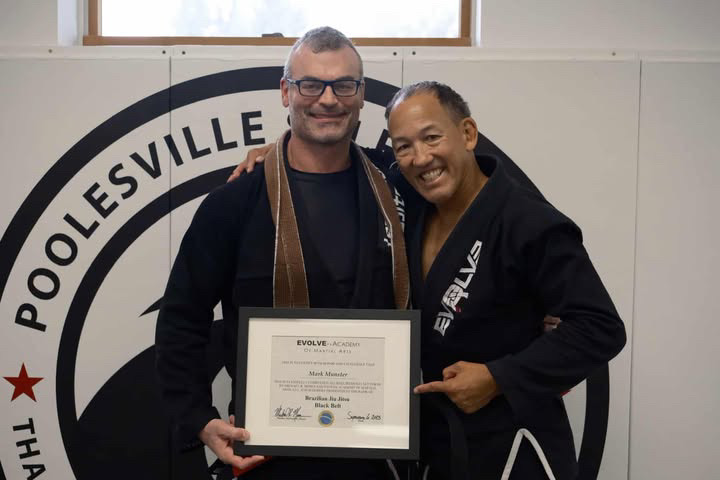
Coach Mark
Brazilian Jiujitsu Black Belt
Owner and Head Instructor, PSD
90 Day Special
Thank you! One of our Coaches will be in contact with you!